
Project Overview
Smart devices can be amazing tools. Internet-connected phones, watches, and tablets help us learn, create, and stay connected. They also bring challenges, like constant notifications, online drama, and content that young people may not yet be ready to navigate.
That’s why many educators and health professionals encourage families to think intentionally about when and how young people begin using smartphones and other smart devices. Delaying use gives young people more time to build important life skills first, like managing emotions, focusing on schoolwork, solving problems, and building real friendships.
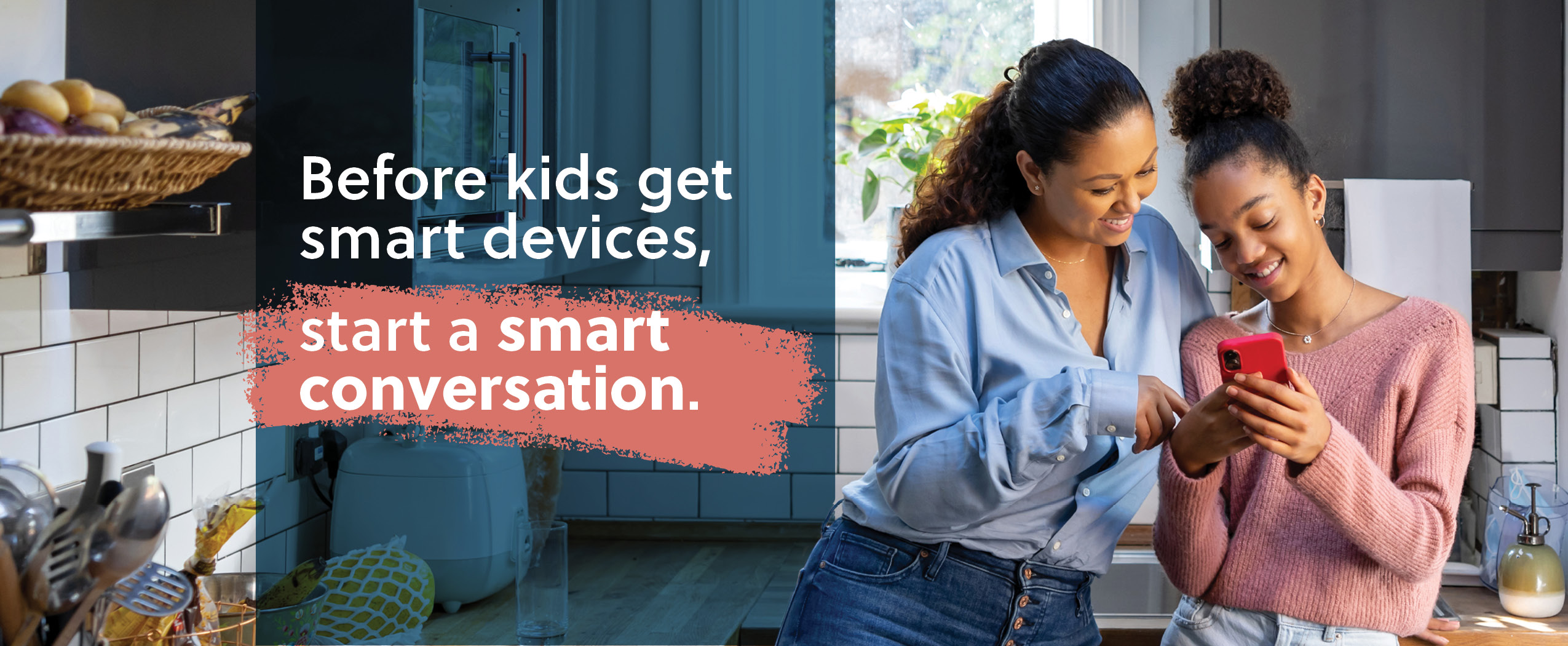
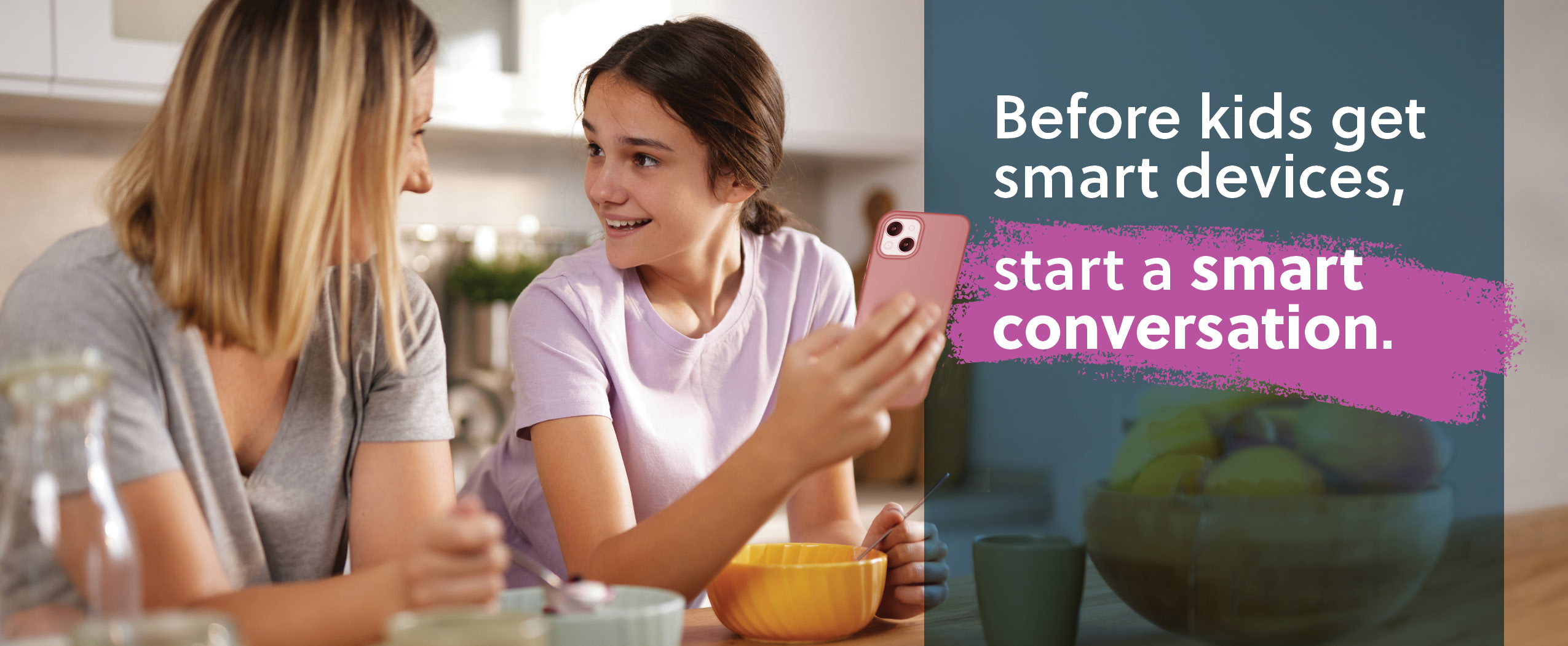
This campaign was created to emphasize the important important role that adults play in guiding youth towards a healthy relationship with devices. Simple steps like creating a family media plan, setting screen-free times, setting parental controls, all while modeling healthy phone habits can make a big difference.
Resources for this campaign include a PSA outreach template, two press release templates, and 9 social media graphics with captions that you can share around your community.
Project Resources
SOCIAL MEDIA POSTS:
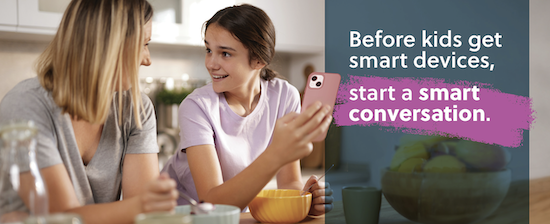
Smartphones, smartwatches, and tablets can open doors to connection and learning. They also bring pressures young people may not be ready to manage. Delaying smart device use gives kids time to build confidence, communication skills, and resilience first.
Talk with your kids about the right time and the right way to use screens. Listening and making decisions with their input will help them succeed.
Get answers and ask questions of your own at this Social Media and Youth Mental Health Q&A Portal: www.aap.org/en/patient-care/media-and-children/center-of-excellence-on-social-media-and-youth-mental-health/qa-portal

Is your child ready for a smart device?
Explore these tips and tools to help guide parents and caregivers: https://screenready.att.com/parents-caregivers/


Want to help kids build healthy screen habits?
Try the 5 Cs of media use:
• Child – What works for your kid?
• Content – Is it positive and age-appropriate?
• Calm – Are screens being used to cope with stress?
• Crowding Out – Is screen time replacing sleep, friends, or activities?
• Communication – Keep a constructive conversation going.
Learn more at: https://www.healthychildren.org/English/family-life/Media/Pages/kids-and-screen-time-how-to-use-the-5-cs-of-media-guidance.aspx?_gl=1*va6a3*_ga*NDc5NTMyMzk0LjE3NzUyMzUwMjU.*_ga_FD9D3XZVQQ*czE3NzUyMzUwMjQkbzEkZzEkdDE3NzUyMzUxMzIkajQxJGwwJGgw


Research and experience show that delaying the introduction of smartphones can help kids:
• Sleep better
• Improve focus at school
• Spend more time with friends in person
• Experience less social pressure online
Learn more about the potential effects of smart devices on young people: www.chop.edu/news/childrens-hospital-philadelphia-study-links-smartphone-ownership-childhood-increased-risk


Healthy phone habits start with clear expectations. Try creating a simple family media plan together:
• When devices are allowed
• When devices are off (meals, bedtime, school)
• What apps and sites are appropriate
Clear expectations can reduce stress and help kids feel supported. Learn more about making a media plan that fits your family: www.healthychildren.org/English/fmp/Pages/MediaPlan.aspx


Children pay attention to how adults use phones. Try modeling healthy screen habits:
• Put phones away during meals
• Take screen breaks together
• Make time for device-free family activities
The habits you show today help shape the habits kids build tomorrow. Learn about healthy digital habits here: https://screenready.att.com/toolkit

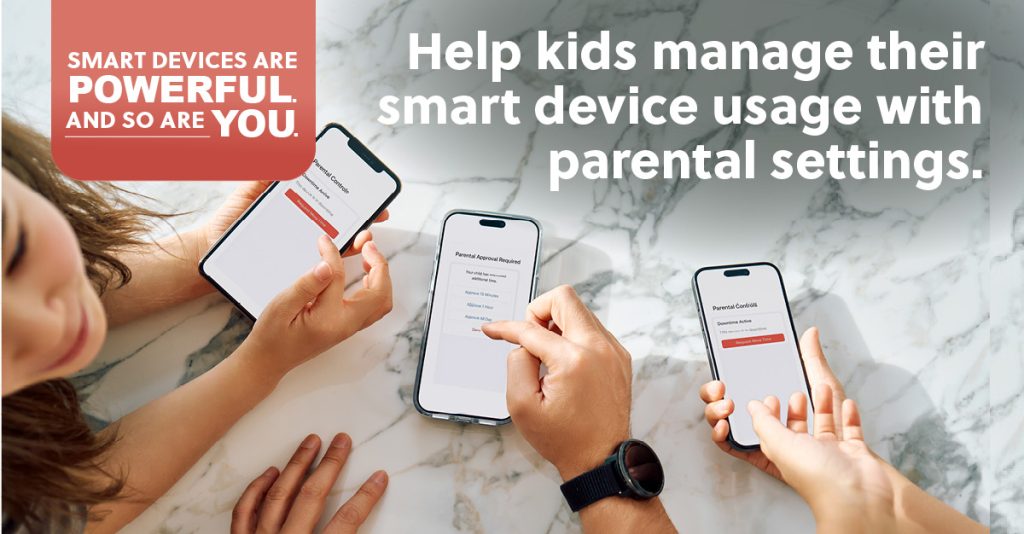
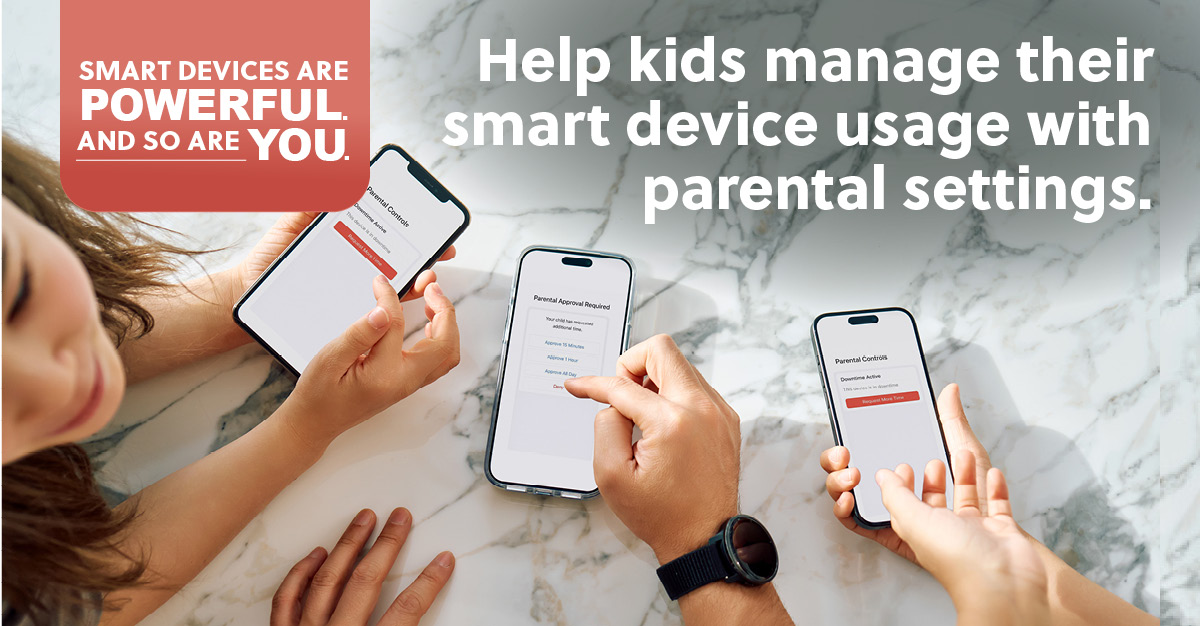
Managing settings and app limits can support safer device use for kids and teens.
Having real conversations is still the most important tool. Talk with your child about:
• Online kindness
• What to do if something feels wrong
• When to ask for help
Technology can support safety, but trust and communication matter most. Learn how to manage parental settings on many common platforms: www.commonsensemedia.org/parents-ultimate-guides

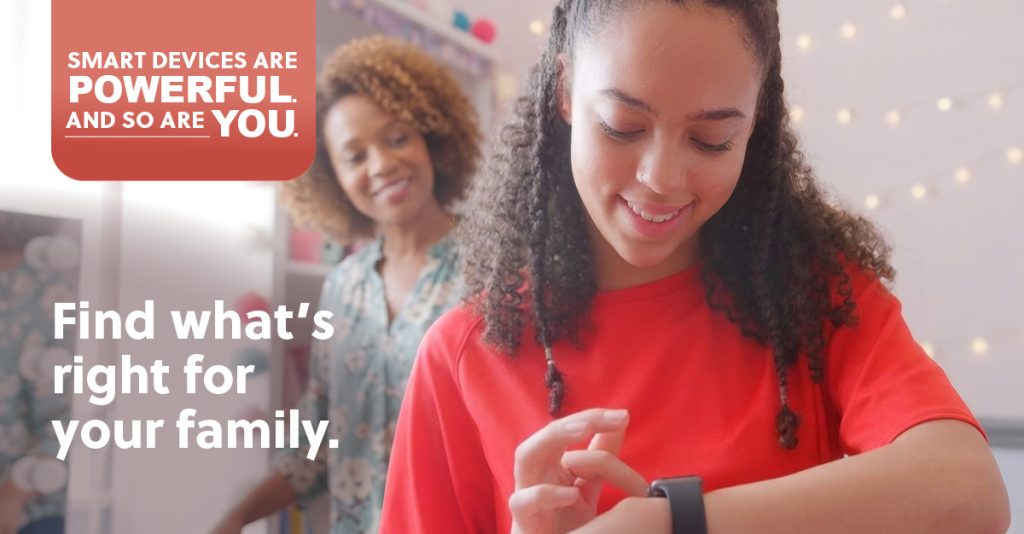
Every family makes different decisions about smart devices. Delaying is about preparation, not punishment.
Get help making your decision with this report from the American Academy of Child & Adolescent Psychology: www.aacap.org/AACAP/Families_and_Youth/Facts_for_Families/FFF-Guide/Preparing_Childs_First_Cell_Phone-140.aspx

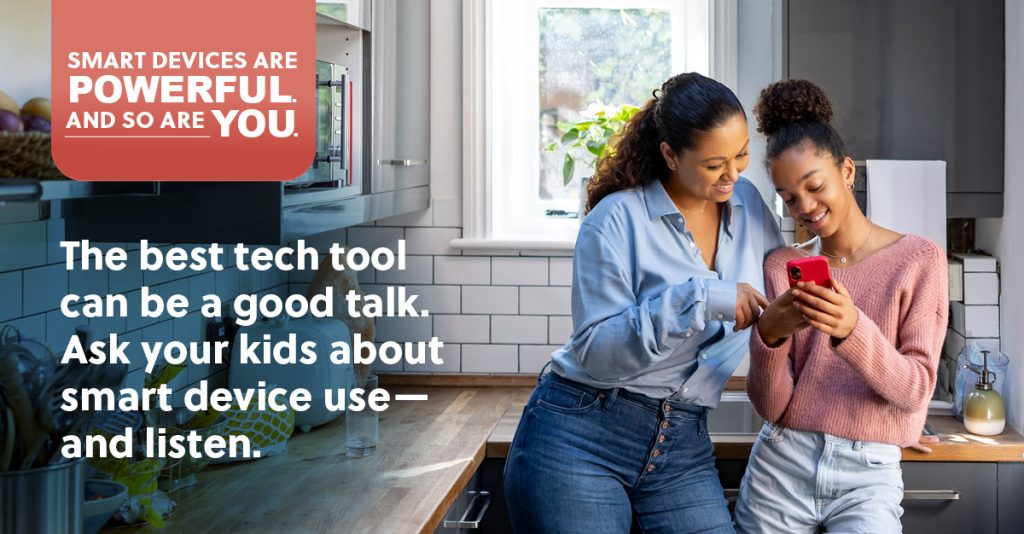
It’s important to talk with your kids about healthy smart device use. We’re curious: How do you start the conversation? What questions do you ask? Do you ask kids what they like about their phone or tablet? Do they feel FOMO if they’re not online? Let us know in the comments.
NEWSLETTER TEMPLATE & GRAPHICS:
Smart Devices and Youth: Why Timing Matters
Smart devices can be amazing tools. Internet-connected phones, watches, and tablets help us learn, create, and stay connected. They also bring challenges, like constant notifications, online drama, and content that young people may not yet be ready to navigate.
That’s why many educators and health professionals encourage families to think intentionally about when and how young people begin using smartphones and other smart devices. Delaying use gives young people more time to build important life skills first, like managing emotions, focusing on schoolwork, solving problems, and building real friendships.
Smart devices are powerful. And young people are powerful too, especially when they have the time and support to grow before stepping fully into the online world.
Adults play an important role as guides. Instead of rushing into devices because “everyone else has one,” families can take time to talk about readiness and set clear expectations. Simple steps like creating a family media plan, setting screen-free times, setting parental controls, all while modeling healthy phone habits can make a big difference. Discuss the steps you’re taking as a family so that everyone understands why rules are in place.
Having family conversations about online kindness, staying safe, and knowing when to ask for help are important. So is communicating your family’s online expectations to the families of your child’s friends. When families approach smart device use with intention and support, young people are better prepared to use technology in ways that strengthen their confidence, protect their well-being, and enhance—not replace—their real lives. Families that want to stay in phone contact with their kids may consider kid-friendly traditional cell phones that focus on talk and text features.
The American Academy of Child & Adolescent Psychiatry has valuable advice on preparing for your child’s first smart device. You can also explore this short tool to reflect on your child’s readiness for a smart device: https://screenready.att.com/parents-caregivers/
RADIO PSA TEMPLATE:
PUBLIC RADIO PSA [all are 20 words]
VT Public requires a clear ID of the underwriter at the front of the spot, and about 10 seconds/up to 20 words. We have provided three versions that could be run in rotation (their maximum allowed), in order to get in more of the message.
[Today’s programming is brought to you in part by…]
1.
…Prevention Lead Region Four, sharing resources to help families support healthy smart device habits for young people. Online at pl4-dot-org.
2.
…Prevention Lead Region Four, promoting healthy smart device use and conversations to help young people and families. Online at pl4-dot-org.
3.
…Prevention Lead Region Four, encouraging families to think about readiness before young people begin smart device use. Online at pl4-dot-org.
BROADCAST RADIO PSA:
[VO:] When should your child get a smartphone? There’s no one right answer.
Smart devices can connect kids to friends and learning. They can also bring pressure, distraction, and risks.
That’s why focusing on readiness is important, not just age. Setting boundaries, having open conversations, and modeling healthy habits can help kids be more successful. When kids are supported, they’re better prepared.
Smart devices are powerful. And so are you.
Brought to you by Vermont Prevention Lead Region 4. Learn more at pl4-dot-org.